
Oct 22, 1979. My 18th birthday.
I was standing in the hallway of our home in Germany, pulling on my parka to cycle to school. My mother approached me to wish me happy birthday. Her wish for me: that I would never have children as horrible as the one I was.
You can tell from those words that things had not been going well in my family. On the surface, we were quite privileged: nice home, education, music, travel. Emotionally, however, our family was a war zone that had been raging for generations.
I escaped to university, initially to study biology. By the early 90s, after several changes of direction, I found myself in Scotland, working with people on the margins of society: homeless individuals with severe mental illness, sex trade workers, people affected by HIV/AIDS, at-risk youth. People whose lives had been visibly devastated by trauma. I loved the work but became frustrated when I realized that all we were doing was putting band-aids on problems with much deeper roots.
That realization caused me to pivot and return to university a second time to train as a person-centered counsellor. I felt that I had finally found what I was meant to do in life and was really making a difference.
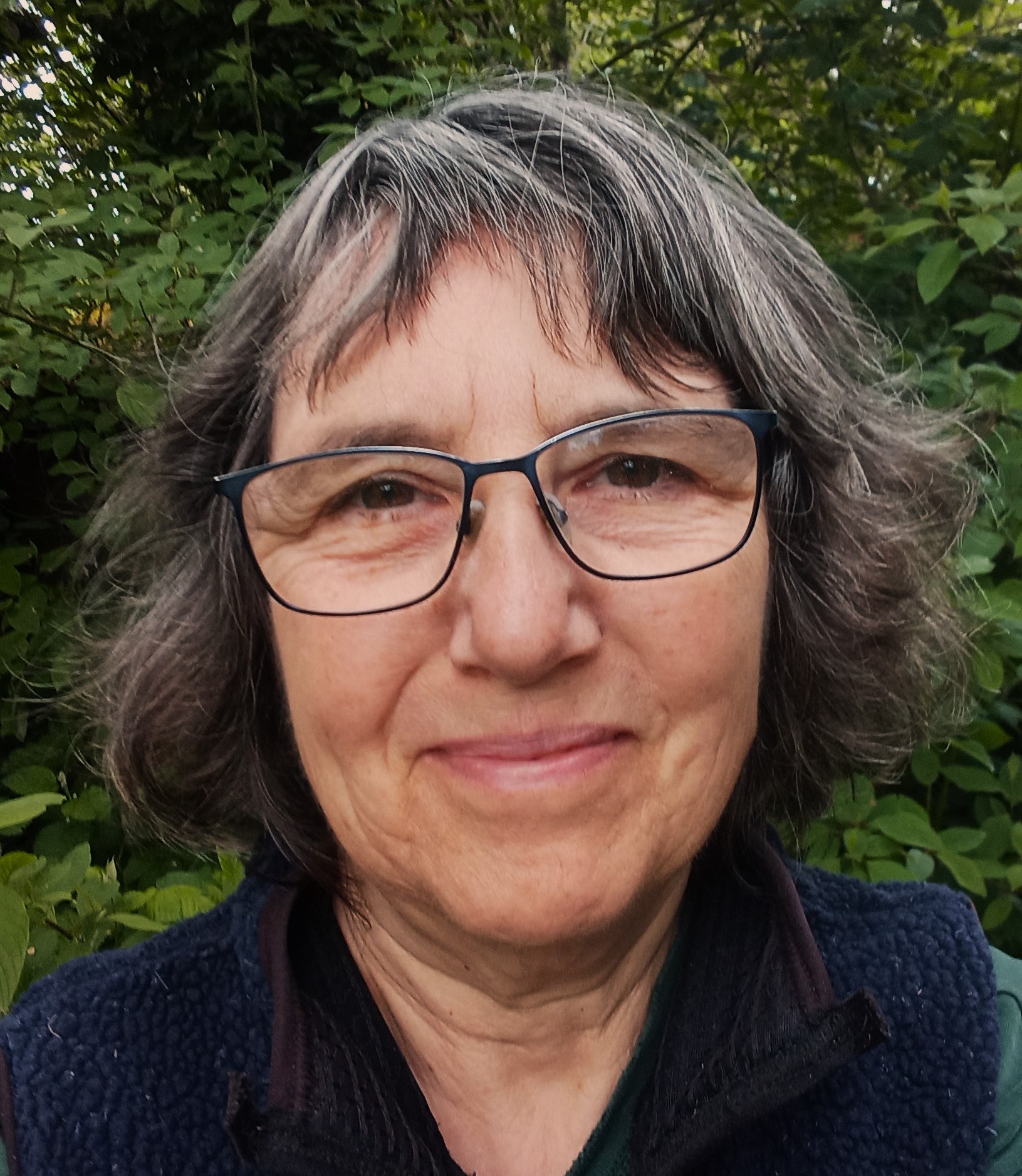
Then, life took another turn. I decided to return to Canada - where I was born - only to discover that my European qualifications were worthless there. I was not in a position to finance yet another university degree and had to earn a living. For years I took whatever work I could find while trying to find my way back to the intensive healing work I really wanted to do.
In about 2014, a friend of the family mentioned EFT to me. Being the left-brained science nerd that I am, I immediately went and looked at the research. It was promising but limited. I filed it away under "interesting, keep watching" - and promptly forgot all about it.
A few years later "tapping" came up in another conversation. I looked at the research again - and discovered that it had exploded. Over 100 solid studies proving efficacy. I was sold. Within a couple of days I had signed up for training - and I am not someone who normally makes big decisions in a hurry! The evidence was simply so convincing.
Today I combine EFT with my person-centered counseling background and lived experience with complex trauma to guide people like you through your healing journey.
Why I Focus on People Who Want to Change the World: My Theory of Change
For decades, I worked with people whose lives had been completely derailed by trauma. Their suffering is visible, acknowledged by society, and it gets services (however inadequate). But in recent years, I've realized that there is a group of trauma survivors that is just as underserved: high-functioning people who have learned to hide their pain so well that nobody realizes just how bad things really are under the surface. Often, they themselves don't realize that they need help, even though the trauma they carry rivals anything I saw in my crisis work. And when they finally do find the courage to do something about it, they discover that there are not enough professionals trained or willing to work with really deep trauma. I have lost track of the number of people who have told me that they had been turned away by therapists who tell them their trauma is "too severe" or "too complex."
This is what makes me furious: talented, skilled, visionary people with solutions the world desperately needs are stuck - not because their trauma is untreatable, but because they've been told it is. Meanwhile, we face climate crisis, social injustice, health inequities, and a thousand other urgent problems. The waste of human potential is staggering and completely unnecessary. We have tools that work. As of 2025 EFT has over 300 research studies proving its efficacy, including for severe, complex PTSD. That's why I made a deliberate choice about my practice.
As a solo practitioner, I can only work with a limited number of people. So, I focus my time and attention where it can have the greatest ripple effect: on people whose healing will create change far beyond our sessions together. That is my "scaling." Not hosting events for 20,000 people or running surface-level courses. It's working at depth with individuals who then go out and bring their gifts to hundreds or thousands of people in their lifetime, who in turn bring their gifts to the world.
When you heal the trauma that's getting in your way, you don't just feel better—you gain capacity to bring your vision to life. And when you can finally show up fully for your mission, your impact reaches far beyond what we do together in these sessions.
It's the leverage I'm looking for. Your healing multiplies outward.
Want to read more about why I believe healing is the key to creating lasting change? Read my thoughts on turning pain into purpose.
Beyond the Therapy Work
I live on a small farm on Vancouver Island, off the west coast of Canada, with my husband. We are Level 3 foster carers for children and youth with complex trauma - we experience daily how trauma shows up in everyday life and understand what actual healing requires beyond theory. On our farm, we breed endangered livestock breeds, a different kind of mission to preserve what's valuable and at risk of being lost.
I'm also a genealogist and family historian with a deep interest in intergenerational trauma - how patterns pass through family lines and how healing yourself can break cycles that have persisted for generations. Sometimes, understanding your family's story really helps with understanding the patterns you are living.
The farm, my animals, the natural world around me keep me grounded - this work is intense, and I couldn't do it without balance and connection to the earth.
If my story resonates with you, I'd be honored to explore how we might work together. You can learn more about how EFT sessions work here or book a free first session here to experience it for yourself.
One Baptism, Dozens of Cousins: Solving a French-Canadian Brick Wall
Even though French-Canadian Catholic parish registers are surprisingly complete even as far back as the latter part of the 17th century, it can still be a challenge to actually find someone in them.
French Canadian names are notorious for having multiple spellings that sound exactly the same when spoken. In addition, they often suffered from anglicization after the move south across the border. For example: Deschambeault / Deschambeaux / Deschambaut / Deschambautt / Dechambeau / Dechambeault / Dechambeaux / Des Chambault / De Chambeau, anglicized to Shambeau / Shambo / Dishambo / Deshambo.
For us today that isn’t much of a problem. Think about what happens every time you tell someone your name who has to write it down or enter it into a database. Right? The first thing the clerk will say to you is “Could you please spell that for me?” Well, for our ancestors that was often not an option - because they were unable to spell their names. Everyone who has done any amount of pre-1900 genealogy is well familiar with the X and annotation “his” or “her mark”, or the French equivalent “ont déclaré ne savoir signer” (declared that they didn’t know how to sign), or some variation thereof. By the time of the 1871 census, only about 50-60% of French Canadians were literate, and the percentage was even lower in rural areas. On top of all that, the priest or clerk’s handwriting was often atrocious, leading to transcription errors.
Consequently, to capture all the possible variations while doing a database search for a person requires time, patience - and the creative use of wildcards.
Then there is the French-Canadian tradition of “dit” (aka - also known as) names, secondary family names.
It all started with the military: Soldiers who enlisted in the French military customarily adopted a nom de guerre (war name) to protect their identity and maintain military records. When these soldiers retired from the military, received land grants and married local women, they kept their military moniker. A soldier named Jean Baptiste Lalonde whose war name was Latreille became Lalonde dit Latreille in the parish registers, and his children inherited both names.
In addition, early New France had a massive demographic bottleneck: a very small group of original founding families had an incredibly large number of children. Within three generations, an entire village might consist of dozens of families, all named Tremblay, Gagnon, or Roy. To make matters worse, they heavily reused the exact same first names (almost every boy was baptized Jean-Baptiste or Joseph, and every girl Marie). So, families tacked a dit name onto their original surname to distinguish their specific branch from their cousins down the road.
A family might use both names interchangeably for 150 years. So, someone might be baptized Fleury dit Deschambault, recorded as just Deschambault for their marriage, and just Fleury on their burial record. Around the mid-19th century, as record-keeping gradually standardized, families finally picked one name and dropped the other - meaning two brothers could end up legally establishing two entirely different modern surnames.
In this case, the client had provided the following info: she was looking for proof of Canadian birth for Arthur Joseph (Josephat?) Chabot, born approximately 1893 in Canada, married to Exilda Paquin. There was some documentation for his life in the US, but she had run into a brick wall trying to trace him across the border.
Thankfully, it was fairly easy to find Arthur Joseph and Exilda’s marriage registration in Fitchburg, Worcester, Massachusetts on 4 Aug 1913. And, very fortunately, marriage records in that place and time recorded the names of the parents of both bride and groom. That gave me something to work with. Arthur’s father was one Cyrille Chabot, his mother Rose Delima Dupuis. While Chabot and Dupuis are quite common French family names, the first names Cyrille and Rose Delima are a bit less common, and certainly in combination. Had it been Jean Baptiste and Marie, I might not have been able to progress further.
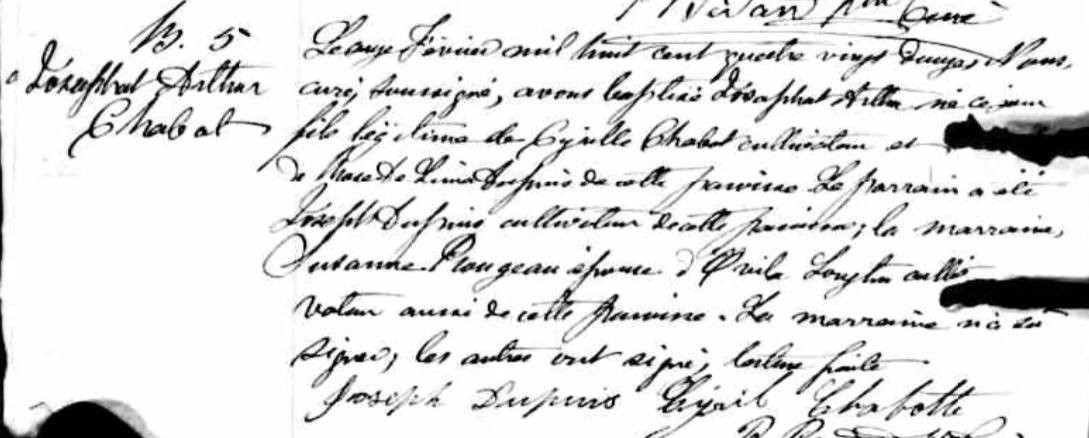
But this information allowed me to search the databases and narrow down which of the multiple Joseph or Arthur Chabot entries - and there were dozens of them within approximately the same time frame - was in fact M’s Canadian ancestor. Success! Josaphat Arthur Chabot, son of Cyrille Chabot, farmer, and his wife Rose De Lima (note the spelling variant Delima/De Lima) Dupuis, was baptized on 11 Feb 1892 in St-Constant, Quebec – not that far from Montreal as the crow flies, but on the other side of the St Lawrence River. Josaphat Arthur had become Arthur Joseph – another example of the many ways names could morph from one document to the next.
The client had mentioned that she was one of a large group of extended family all working together to establish Canadian citizenship by descent. This one previously missing document will now allow all of them to move forward.
Many of our ancestors have many descendants. If one person does the work to document the family line, many people could benefit.

@ Copyright 2026 Healing All Our Pasts | All rights reserved

@ Copyright 2026 All Our Pasts Are History
All rights reserved